Key takeaways
- EMS SmartCell is a single-panel wireless system supporting up to 64 devices, suited to smaller and less complex buildings.
- EMS FireCell is a modular, addressable system that scales per loop and panel, and can network multiple panels for large or multi-building sites.
- Both are EN 54 certified and IS 3218 compliant. The right choice comes down to device count and site complexity, not price alone.
- As an authorised EMS installer, VRF specifies whichever system fits the project, not the one that’s easiest to sell.
The right EMS wireless fire alarm system for a building comes down to two things: how many devices the site needs, and whether it’s one building or several. EMS SmartCell and FireCell are both wireless, both EN 54 certified, and both supplied and specified by VRF, but they’re built for different jobs, not different quality tiers.
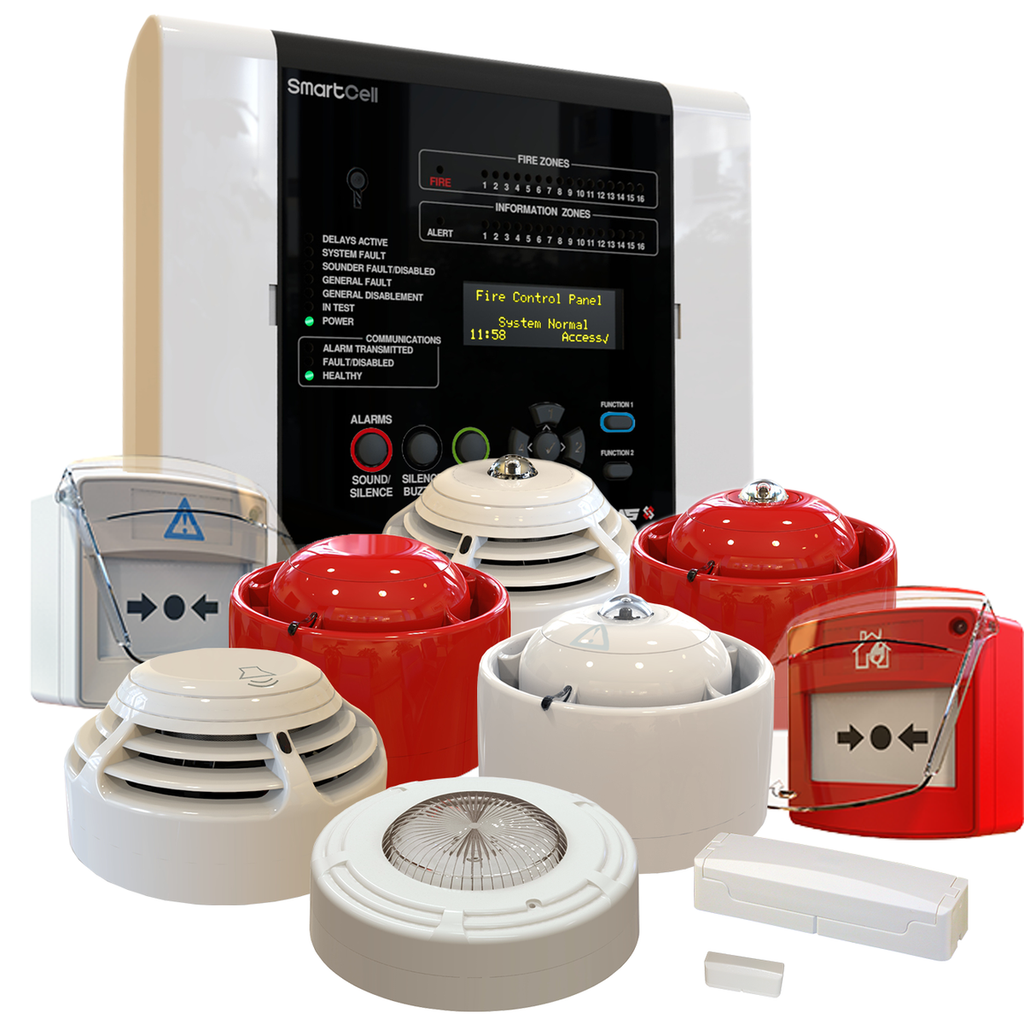
SmartCell is a compact, self-contained panel aimed at smaller commercial buildings and retrofit or heritage projects where minimal disruption matters most.
FireCell is an addressable, modular architecture built to scale, first within a single panel across multiple loops, then across networked panels for larger or multi-building sites. As an authorised EMS partner for over 25 years, VRF has specified both systems extensively, and the pattern below is how we typically advise clients to choose between them.
What is the difference between EMS SmartCell and EMS FireCell?
SmartCell is a single, self-contained wireless panel built for smaller sites, while FireCell is a modular, addressable system that scales across loops and networked panels for larger or multi-building developments.
The core difference isn’t just device count. SmartCell is one panel doing one job well, while FireCell is an architecture designed to grow. EMS’s own product literature positions SmartCell for “small to medium-sized installations,” not as a cut-down version of FireCell.
How many devices can SmartCell support?
SmartCell supports up to 64 wireless devices per panel, a maximum of 32 dedicated fire detection devices plus 32 information devices across 16 configurable zones. That’s a hard ceiling on a single panel. SmartCell doesn’t expand beyond it, so once a site’s device count or zone requirements are likely to exceed 64, FireCell is the correct specification from the start, not a bigger SmartCell configuration.
Is FireCell suitable for large commercial or multi-building developments?
Yes, FireCell is EMS’s addressable wireless architecture, built specifically for scale. A single FireCell loop supports up to 126 devices, and panels are available with up to eight loops, giving up to 1,008 devices on one panel before panels are networked together.
For genuinely large or multi-building estates such as hospitals, universities, and multi-block developments, several FireCell panels can be linked wirelessly, extending capacity well beyond a single panel’s ceiling.
Can a building start with SmartCell and scale to FireCell?
Not directly. SmartCell and FireCell are different panel architectures, so moving from one to the other means replacing the panel and re-commissioning the system, not adding a card or extending zones.
If a phased development might eventually exceed SmartCell’s 64-device ceiling, specifying FireCell from the outset, even at a smaller initial device count, avoids a full system replacement later. That decision is best made at the survey stage, before the first panel is installed.
Which EMS system is right for a mixed-use development?
For most mixed-use developments, the deciding factor is total device count across the site and whether the buildings need to share one fire strategy or operate independently. A single block with roughly 60 devices or fewer generally suits SmartCell, while a multi-block site, or any single building likely to exceed that device count, points to FireCell’s networked panel architecture from the start.
| System | Max devices per panel | Zones/loops |
| EMS SmartCell | Up to 64 (32 fire + 32 information) | 16 zones, single panel |
| EMS FireCell | Up to 126 per loop; up to 1,008 on an 8-loop panel | 1–8 loops per panel, networkable across multiple panels |
Choosing between the two also shapes installation timelines and ongoing cost. SmartCell’s single-panel design typically means a faster, simpler install for smaller sites, while FireCell’s networked architecture takes more commissioning time up front but avoids the cost of replacing a system that’s outgrown its panel later. Getting this decision right at the specification stage is usually cheaper than correcting it after installation.
If you’re specifying a wireless fire alarm system and want confirmation on which EMS platform fits your project, talk to us before the design is finalised.
Frequently asked questions
SmartCell is a single, self-contained wireless panel for smaller buildings, supporting up to 64 devices. FireCell is a modular, addressable wireless system that scales across loops and networked panels, built for larger or multi-building sites.
SmartCell supports up to 64 wireless devices per panel, up to 32 fire detection devices and 32 information devices across 16 zones.
Yes. A single FireCell loop supports up to 126 devices, with panels available in configurations up to eight loops (up to 1,008 devices per panel), and multiple panels can be networked together for larger or multi-building sites.
Not directly. SmartCell and FireCell are different panel architectures, so upgrading means replacing the panel and re-commissioning the system rather than expanding the existing one. If growth beyond SmartCell’s 64-device ceiling is likely, specify FireCell from the outset.
It depends on total device count and whether the buildings share one fire strategy or operate independently. Sites with roughly 60 or fewer devices generally suit SmartCell, while larger or multi-block sites suit FireCell’s networked panel architecture.